





A Beginner’s Guide to Stretching at Home for Better Flexibility
Stretching is a simple yet powerful way to improve your overall health and well-being. Whether you want to increase your flexibility, reduce muscle stiffness, or simply relax after a long day, stretching at home can be both convenient and effective. This beginner’s guide will walk you through the basics of stretching, how to do it safely, and some easy exercises you can start with today.
Why Stretch at Home?
Stretching has many benefits, including:
– Improving flexibility and range of motion
– Reducing muscle tension and soreness
– Enhancing blood circulation
– Promoting relaxation and stress relief
– Helping prevent injuries
Doing stretches at home allows you to fit them into your daily routine without needing special equipment or a gym membership. Plus, you can listen to your body and move at your own pace.
Getting Started: Stretching Basics
Before you begin stretching, keep these important tips in mind:
Warm Up First
Stretching cold muscles can increase the risk of injury. Spend 5-10 minutes warming up with light activity like walking, marching in place, or gentle jogging to get your blood flowing.
Stretch Slowly and Gently
Move into each stretch gradually and hold it without bouncing. Bouncing can cause muscle strains.
Hold Your Stretch
Aim to hold each stretch for 15 to 30 seconds. Focus on feeling a gentle pull, but not pain. If you feel sharp or intense pain, ease off.
Breathe Normally
Take deep, steady breaths while stretching to help relax your muscles.
Stretch Both Sides
Make sure to stretch both sides of your body evenly to maintain balance.
Types of Stretching
There are different styles of stretching, but as a beginner, it’s best to focus on two main types:
Static Stretching
This involves holding a position for a set time to lengthen muscles. It’s ideal for cooling down after exercise or relaxing at home.
Dynamic Stretching
This includes controlled movements through your range of motion, like leg swings or arm circles. It’s useful for warming up before activity.
For stretching at home, static stretches are a great way to start. You can also add some gentle dynamic stretches in your warm-up.
Simple Stretching Routine for Beginners
Here’s a step-by-step guide to a full-body stretching routine you can do at home. Aim to complete this routine 3-4 times per week.
1. Neck Stretch
– Sit or stand tall.
– Slowly tilt your head to the right, bringing your ear toward your shoulder.
– Hold for 20 seconds.
– Repeat on the left side.
2. Shoulder Stretch
– Bring your right arm across your body.
– Use your left hand to gently press your right arm closer.
– Hold for 20 seconds.
– Switch arms.
3. Triceps Stretch
– Raise your right arm overhead.
– Bend the elbow to touch your upper back.
– Use your left hand to gently press on the right elbow.
– Hold for 20 seconds.
– Switch arms.
4. Chest Stretch
– Stand in a doorway with hands placed at shoulder height on the frame.
– Step forward slowly until you feel a stretch across your chest.
– Hold for 20-30 seconds.
5. Side Stretch
– Reach your right arm overhead and lean gently to the left.
– Keep your hips facing forward.
– Hold for 20 seconds.
– Switch sides.
6. Seated Forward Bend
– Sit on the floor with legs extended straight.
– Slowly bend forward at the hips, reaching toward your toes.
– Keep your back straight as much as possible.
– Hold for 30 seconds.
7. Hip Flexor Stretch
– Kneel on your right knee with your left foot planted in front.
– Shift your weight forward to stretch the front of your right hip.
– Hold for 30 seconds.
– Switch sides.
8. Hamstring Stretch
– Lie on your back with one leg extended straight on the floor.
– Lift the other leg toward the ceiling, holding behind your thigh or calf.
– Keep the lifted leg straight but not locked.
– Hold for 30 seconds.
– Switch legs.
9. Calf Stretch
– Stand facing a wall.
– Place your hands on the wall and step one foot back, keeping it flat on the floor.
– Lean forward slightly until you feel a stretch in your back calf.
– Hold for 20-30 seconds.
– Switch legs.
Tips for Making Stretching a Habit
– Set a Routine: Pick a consistent time each day or week to stretch.
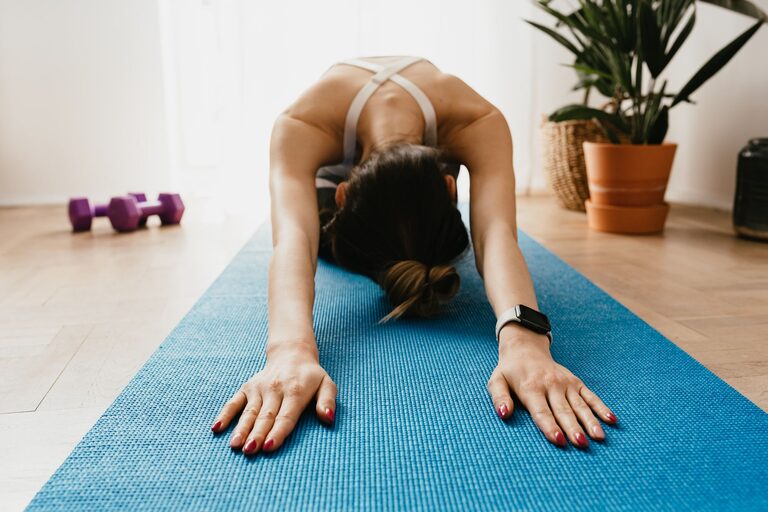
– Create a Comfortable Space: Find a quiet, uncluttered spot with enough room to move.
– Use Props: A yoga mat, strap, or towel can help support certain stretches.
– Listen to Your Body: Progress gradually and avoid pushing too hard.
– Stay Hydrated: Drinking water before and after stretching helps muscle health.
When to Avoid Stretching
If you experience sharp pain, swelling, or an injury, avoid stretching that area until cleared by a healthcare professional. Stretching should never cause intense or lasting pain.
Final Thoughts
Stretching at home is an accessible and effective way to nurture your body. With just a few minutes each day, you can enjoy improved flexibility, reduced tension, and a greater sense of well-being. Start slowly, be consistent, and remember that every small effort counts toward a healthier, more flexible you.
Happy stretching!